
THE ORIGIN OF AFRICAN HELICOBACTER AND MICROBIOTA STUDY GROUP – PROF. STELLA IFEANYI SMITH, FAS
Many years ago in 1998, Prof. Arigbabu my mentor in Helicobacter pylori, supported me as a young PhD graduate who stumbled on H. pylori while doing a pre-doctoral in Manchester, UK with a European Union fellowship. (The story will be told later about how I stumbled into H. pylori and interest in doing research on H. pylori).
- In 1999, I obtained my first research grant from Roche Foundation Research Grant titled ‘Molecular Epidemiology of Helicobacter pylori from South-west, Nigeria’ and used to travel to Obafemi Awolowo University Teaching Hospital Complex (OAUTHC), Ile-Ife, University College Hospital (UCH), Ibadan and of course Lagos to collect biopsy samples for pylori culture with my first PhD student then. Prof. Arigbabu noticed
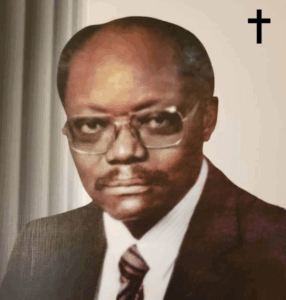 my keen interest on H. pylori and supported me during my early years on H. pylori culture. I had been able to obtain an Alexander von Humboldt fellowship (AvH-a prestigious German post doc) for which I travelled to Dresden Munich to work on ‘Molecular epidemiology of local strains of H. pylori. On my return, I was the more determined to work on H. pylori, so Prof. Arigbabu and I then decided to form the West African Helicobacter Study Group in 2002, but due to paucity of funds, we could not continue with the Group after a year. I still nursed within me the idea of establishing Helicobacter pylori working Group, not just in Nigeria, but outside Nigeria. This is because the organism is poorly studied and could not compete with funding given to research on HIV/AIDS, malaria and TB. I did not let my dream die, and continued applying for grants from which I got ICGEB grant, Italy and supported a BSc project from my experience travelling to a LMIC country like mine. I had now started having some publications on H. pylori and then I was able to reach out to my collaborator from Munich, where I had done my second AvH fellowship in 2003 and together we applied for the Deutsche Forschungs Gemeinschaft (DFG) in English, the German Research Foundation grant in 2010 and we were given. This grant lasted for 8 years, with funding given to three PhD students, two from University of Lagos and one from University of Benin and one laboratory technician, who all went to spend six months and one month respectively. It was also during one of the DFG conferences in an African country (Cameroon), that I met one of my PhD students who heard me talking passionately about Hp and she held on to me tenaciously and that was how, she secured an ICGEB Smart fellowship to do part of her work in my laboratory as her second supervisor. We were able to publish one article from the work. My dream to establish the African Helicobacter and Microbiota Study Group (AHMSG) now became stronger and it materialized when I was looking for another German collaborator to continue the H. pylori study with the DFG grant. Dr. Christian Schulz whom I approached to collaborate with me on Helicobacter pylori research using possible funding from DFG agreed to collaborate with me and I asked that we include Prof. Roland Ndip, whom I had known for a while and then Prof. Mashiko who I was privileged to assess her proposal for funding a year earlier (I just instinctively jotted her email contact, with the hope that at the right time, she would be brought in for the AHMSG). We applied for the DFG funding, out of which I informed the Group of my interest in starting an African Helicobacter and Microbiota Study Group. We were however, not successful with our application, but I still continued my collaboration with Dr. Schulz and reminded him again of my dream of forming the AHMSG. It was then he reached out to Prof. Peter Malfertheiner, one of the founding fathers of the European Helicobacter and Microbiota Study Group to discuss my dream to him and Prof. Malfertheiner asked him to inform me that I should go ahead and form my Group.
  This was January 2021. I now reached out to Prof. Reid Ally from South Africa (whom I had worked with on the DFG project second phase) and Prof. Setshedi also from South Africa, whom I got her link from the proposal I was asked to review. Prof. Roland Ndip from Cameroon, I already knew. I met Prof. Revathi Gunturu from Kenya during one of my previous DFG funding in Hamburg in 2018 (I still have the Group picture we took on the wall in my office). I also met Dr. Yakhya in 2019 when I went on an Institutional tour to Institut Pasteur, Dakar, where he works and following our discussion on Hp, he mentioned his interest too in working with me on Hp and I also shared my dream of establishing AHMSG. I collected his contact and then for Tanzania and Egypt, I got the contact of Dr. Hyasinta Jaka and Dr. Mohamed Alboraie from the internet by looking for people working on H. pylori in those countries. Prof. Malfertheiner reached out to me to bring in Prof. Naima Armani from Morocco, who was the then head, of World Gastroenterology Organisation (WGO). While all my colleagues from Nigeria (Profs. Arigbabu, Onyekwere, Otegbayo, Ndububa and Ugiagbe), I had known them from my years of collaboration on Hp research. Of course, my postdoctoral, Drs. Tolulope Jolaiya and Abraham Ajayi. AHMSG started with 16 board members from 8 African countries, but we have 15 board members from 10 African countries. Prof. R. Ally (South Africa) and Dr. M. Alboraie (Egypt) stepped down their memberships, while we lost Prof. A. Arigbabu. Our new board members are Prof. Violet Kayamba (Zambia) our current Secretary General, Dr. Evariste Tsibangu-Kabamba (DRC) and Dr. Abdul’Rashid Nashidiengo (Namibia).
 - AHMSG was officially launched in 2022, in Lagos, Nigeria, with Richen Medical Sciences, Hong Kong being our major sponsors. The President of AHMSG changes every two years and I handed over to Prof. Mashiko Setshedi (current President) in Cape Town, South Africa in August 2024. The rest is history. To the glory of God, AHMSG is widely known now and we are moving higher.
- Since 1999, my publications on pylori alone is 54, with five PhD students that worked on Helicobacter pylori.
*My journey into Helicobacter pylori
 I was opportune to obtain European Union scholarship to do a one -year predoctoral fellowship in Withington Hospital, Manchester, UK (1993-1994). With the funding also available for the remaining two years in Nigeria. While in Manchester, my host informed all of us that he had caught the bug, this was in 1994. To my Nigerian mind, I thought he was referring to an insect, only for him to photocopy a page on H. pylori to say he had H. pylori.
That was my first time of hearing about Hp. I even thought it was a white man’s disease, but to my surprise that same evening, my landlady’s (a Nigerian) sister who is a medical doctor and pregnant at that time, asked me if I knew about H. pylori and that her doctor informed her that she had H. pylori. I was visibly surprised as it dawned on me that it was not a white man’s disease but could affect any tribe. I then decided on my own that I was going to pursue research on H. pylori after my PhD, which was on ‘Molecular epidemiology of local strains of C. jejuni/C. coli.’ The rest is history.
– PROF. STELLA IFEANYI SMITH, FAS